Debt Relief vs. Debt Consolidation: What’s the Difference — and Which Is Right for You?
The two terms get used interchangeably, but they are very different tools. One lowers your rate; the other aims to lower what you actually owe. Here’s the plain-English breakdown so you can pick the right path.
What is debt relief?
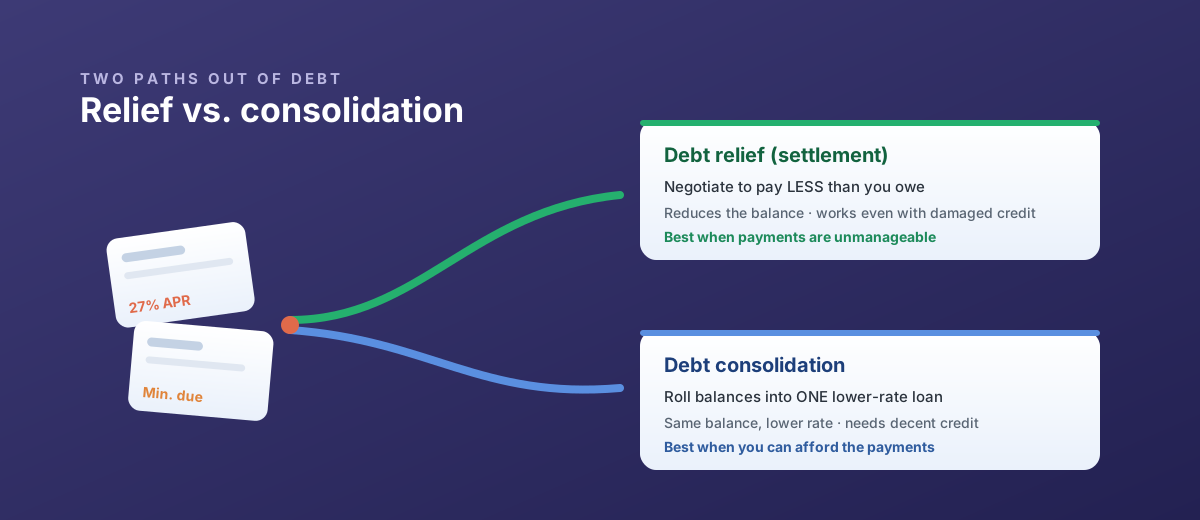
“Debt relief” usually refers to debt settlement: a company negotiates with your creditors to accept less than the full balance to resolve the account. You typically set money aside in a dedicated account each month while negotiations happen, and reputable firms charge a fee only after a debt is actually settled.
The upside is a genuinely smaller balance and a clear end date (most programs run about 24–48 months). The trade-offs are real too: your credit usually drops during the program, interest and fees can grow balances before they settle, and forgiven debt can be taxable.
What is debt consolidation?
Consolidation rolls several balances into one new loan or balance-transfer card — ideally at a lower interest rate — so you make a single payment. You still owe every dollar; you’re just paying it more efficiently, with less of each payment lost to interest.
The catch: qualifying for a rate that actually saves money generally requires decent credit and enough income to afford the new payment. If you’re already behind, a new loan is often out of reach.
The key differences, side by side
| Debt relief (settlement) | Debt consolidation | |
|---|---|---|
| Reduces what you owe? | Yes — that’s the goal | No — lowers the rate |
| Credit needed to start | Any — works with damaged credit | Decent credit for a good rate |
| Credit impact | Higher (short-term drop) | Lower if you pay on time |
| Typical timeline | 24–48 months | The loan term |
| Cost model | Fee only after a debt settles | Interest + possible origination fee |
| Best when | Payments are unmanageable; $10k+ unsecured debt | You can afford payments and qualify for a lower rate |
Rule of thumb: if you can comfortably make your payments and your credit is intact, consolidation keeps your credit healthier. If the payments themselves are the problem — balances growing, minimums unmanageable — that’s the situation debt relief is designed for.
Which one is right for you?
Debt relief fits if…
- You have roughly $10,000+ in unsecured debt (credit cards, personal loans, medical)
- Minimum payments are unmanageable or you’re already behind
- Your credit is already stressed — qualifying for a new loan is unlikely
- You want a smaller balance and a defined end date
Consolidation fits if…
- You’re current on payments and can keep making them
- Your credit is good enough to qualify for a meaningfully lower rate
- Your main problem is juggling multiple bills, not the total owed
- You want the gentlest option for your credit score
Leaning toward debt relief? Our top pick
- Why we picked it: A consumer-finance brand operating for 30+ years with top-tier customer ratings — the most established name we compare
- How it works: A free, no-obligation consultation reviews what you owe and whether settlement makes sense; fees are charged only after a debt is settled
- Best for: Roughly $20,000+ in unsecured debt — no minimum credit score required (confirm current eligibility with the provider)
Go deeper: read our full JG Wentworth debt relief review, or compare providers in our full JG Wentworth review.
Frequently asked questions
Is debt consolidation the same as debt relief?
No. Debt consolidation rolls your balances into one new loan — you still owe the full amount, ideally at a lower rate. Debt relief (debt settlement) negotiates with creditors to accept less than the full balance. Consolidation lowers your rate; settlement aims to lower what you owe.
Which is better for your credit — consolidation or debt relief?
Consolidation is usually gentler on credit: you keep paying on time, just under one loan. Debt settlement typically lowers your credit score during the program because payments are often paused while balances are negotiated. Weigh the short-term credit hit against resolving the debt for less.
Can you consolidate debt with bad credit?
It’s difficult — a consolidation loan generally requires decent credit to qualify for a rate that actually saves money. If your credit is already damaged or you’re behind on payments, debt relief (settlement) may be the more realistic path, since it doesn’t depend on qualifying for a new loan.
Does debt relief reduce what you owe?
That’s the goal. In debt settlement, a company negotiates with your creditors to accept less than the full balance. Results vary and creditors aren’t required to settle; reputable firms charge a fee only after a debt is actually settled, and forgiven debt can be taxable.